Ring Care · Cleaning
How to Clean Rings: A Simple Guide for Every Material
Most rings only need warm water, mild soap and a soft cloth. Here is the method that is safe for almost every ring, the handful of things that genuinely damage them, and what to do by material.
The short answer
Soak the ring for 10 minutes in warm water with a drop of mild dish soap, brush gently with a soft toothbrush, rinse it in a bowl rather than the sink, and dry it with a lint-free cloth.
A ring you wear every day picks up hand cream, soap scum, sunscreen and skin oils. None of that is dramatic. It just settles into the places light used to get to, and one morning the ring looks flat instead of bright.
The good news is that cleaning a ring is genuinely simple, and the things that actually damage rings are a short, specific list. This guide covers the one method that works for almost everything, what to do differently by material, and the small number of situations where the right move is to stop and let a jeweller handle it.
At Foreverings we build rings for daily wear, so this is written for rings that get worn, knocked and washed, not for pieces that live in a box.
How do you clean a ring at home?
Five steps, about 60 seconds of actual work.
- Fill a small bowl with warm water, not hot. Add one drop of mild dish soap.
- Let the ring sit for about 10 minutes. This loosens the film so you do not have to scrub.
- Brush it gently with a soft toothbrush, paying attention to the underside of any stone, where most of the dullness hides.
- Rinse in a second bowl of clean water. Never rinse over an open drain.
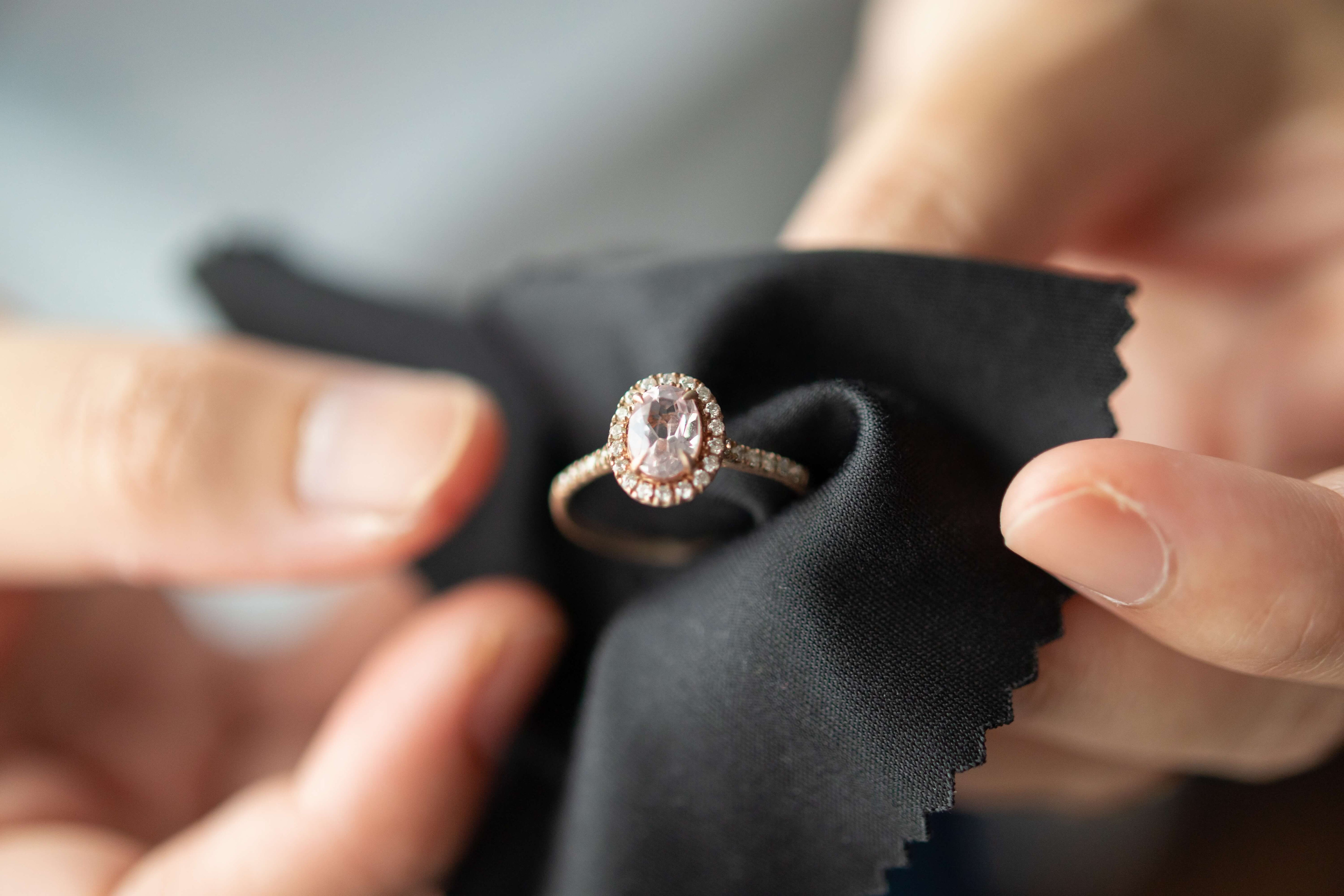
- Dry with a lint-free cloth and let it air dry completely before putting it away.
Once a week is plenty for most people. If you wear hand cream daily or work with your hands, make it twice a week.
Why rinse in a bowl instead of the sink
It is the least glamorous tip here and the one that saves the most heartbreak. A wet ring is slippery, drains are unforgiving, and this is the single most common way people lose a ring at home.
Can I use Dawn to clean my rings?
Yes. Plain liquid dish soap is the standard recommendation, and Dawn works as well as any. What matters is that it is mild and free of additives. Avoid anything marketed as a heavy-duty degreaser, anything with bleach, and anything with grit or scrubbing beads in it.
Use one drop. More soap does not clean better, it just leaves a film you then have to rinse off.
Is it okay to use Windex on a ring?
No, and this one is worth being clear about. Windex and similar glass cleaners contain ammonia. Ammonia is harsh on porous stones like opal and turquoise, it attacks the glue used in inlay work, and over time it dulls plated finishes. It also does nothing that soap and water does not do better.
The same goes for bleach, acetone and toothpaste. Toothpaste is abrasive by design. It is meant for tooth enamel, which is far harder than the metal in your ring, and it leaves fine scratches on any polished surface.
How do I make a dull or cloudy ring sparkle again?
Cloudiness is almost always a film, not damage. Soap residue, hand cream and body oil build a thin layer that scatters light instead of letting it pass through. The soak and brush method above removes it, and the difference is usually visible immediately.
If the ring still looks flat after cleaning, the cause is one of three things:
- Surface scratches on the metal. Normal, and a jeweller can polish them out.
- A stone that has loosened slightly and is sitting at a different angle. Get it checked.
- A worn plated finish. Plating is a surface layer, and it does wear through. That is not a cleaning problem.
What actually damages rings
Short list, and worth knowing because everything else is fine.
- Chlorine. Pools and hot tubs. It attacks the alloys in gold and silver over repeated exposure.
- Ultrasonic cleaners. Fine for a plain metal band. Genuinely risky for opal, emerald, moss agate, pearl, anything with a glued inlay, and any stone with an existing fracture. The vibration works loose exactly what you do not want loosened. The Gemological Institute of America is clear that porous and included stones should not go near one.
- Impact. Not cleaning at all, but it is the leading cause of chipped stones. Take the ring off for the gym and for anything with a barbell, a hammer or a kettlebell in it.
- Sudden temperature change. Matters mainly for opal, which holds water inside its structure and can craze.
- Sleeping in a ring with a raised stone. It snags, and prongs bend slowly rather than all at once.
Good to know
You do not need to be precious about this. A ring is an object you wear. The list above is short on purpose. Everything not on it is normal life, and your ring is built for it.
How to clean rings by material
The method above is safe across the board. What changes by material is what you should avoid.
| Material | Safe method | Avoid |
|---|---|---|
| Tungsten | Soap and water, soft cloth | Very little troubles it |
| Sterling silver | Soap and water, then a polishing cloth | Silver dips on plated pieces |
| Gold plated | Soap and water, soft cloth only | Polishing cloths, abrasives, dips |
| Solid gold | Soap and water, soft brush | Chlorine |
| Rose gold | Soap and water, soft cloth | Abrasives |
| Titanium | Soap and water | Very little |
| Ceramic | Soap and water | Hard impact |
| Gemstone and inlay | Soap and water, no soaking if porous | Ultrasonic, ammonia, heat |
| Wood and organic inlay | Damp cloth only | Soaking, ultrasonic |
A few of these deserve more than a table row. Silver has its own routine and its own reasons for going dark. Gold behaves differently depending on whether it is solid, filled or plated, and getting that wrong is what strips a plated finish. Rose gold raises a colour question of its own. We are writing each of those up separately, and this guide will link to them as they publish.
If you want to browse by material in the meantime, our silver rings, gold plated rings and tungsten rings are the three we get asked about most.
How to clean an engraved ring
Engraving collects the same film everything else does, and it shows more because the letters are recessed. The soak does most of the work. Follow it with a soft brush along the direction of the lettering rather than across it.
You do not need to worry about wearing an engraving away. A laser engraving is cut into the metal, not printed on it. Our guide to ring engraving covers how that is done and why it lasts.
How to clean a ring with an inlay
Inlay rings, the ones with meteorite, wood, opal, dinosaur bone or crushed stone set into the band, are the one category where the standard method needs adjusting.
- Do not soak them. Wipe with a barely damp cloth and dry immediately.
- No ultrasonic cleaner, ever.
- No ammonia, no solvent, no alcohol.
The reason is that inlays are set into a channel, and prolonged water or solvent exposure works at that boundary over time. A sealed inlay is well protected day to day, but soaking it for ten minutes is not day to day.
If you want to see how those inlays are set in the first place, we walk through it in the craftsmanship behind our rings.
When should you stop and see a jeweller?
Home cleaning handles dirt. It does not handle damage. Take the ring in if:
- a stone moves, clicks, or catches light differently than it used to
- a prong feels sharp when you run a finger over it
- the band has thinned noticeably on the underside
- a plated finish has worn through to a different colour
- the ring has been through a hard knock, even if it looks fine
None of these are emergencies. All of them get worse and more expensive if left. If you bought your ring from us and something does not look right, just contact us and we will tell you honestly whether it needs attention.
How often should you clean a ring?
Once a week for a ring worn daily. Once a month for one worn occasionally. Before photographs, obviously.
The only real rule is that little and often beats a rescue mission. A ring cleaned weekly never gets to the stage where it needs anything stronger than soap. Explore our collection if you are looking for something built to take that kind of everyday wear.
Frequently Asked Questions About Cleaning Rings
How do you clean a ring at home?
Soak the ring for 10 minutes in warm water with a drop of mild dish soap, brush it gently with a soft toothbrush, rinse it in a bowl rather than over the sink, and dry it with a lint-free cloth. That method is safe for the great majority of rings.
Can I use Dawn to clean my rings?
Yes. Plain mild dish soap is the standard recommendation and Dawn works as well as any. Avoid heavy-duty degreasers, anything containing bleach, and anything with grit or scrubbing beads in it. One drop is enough.
Is it okay to use Windex on a ring?
No. Glass cleaners contain ammonia, which is harsh on porous stones like opal and turquoise, attacks the adhesive used in inlay work, and dulls plated finishes over time. Soap and water does the job better.
Why does my ring look cloudy?
Cloudiness is almost always a film of soap residue, hand cream and body oil rather than damage. The soak and brush method removes it, and the difference is usually visible immediately.
Can I put my ring in an ultrasonic cleaner?
Only if it is a plain metal band. Ultrasonic cleaners are genuinely risky for opal, emerald, moss agate and pearl, for anything with a glued inlay, and for any stone with an existing fracture, because the vibration works loose exactly what you do not want loosened.
How often should I clean my ring?
Once a week for a ring worn daily and once a month for one worn occasionally. If you use hand cream every day or work with your hands, make it twice a week.
Can I clean an inlay ring the same way?
No. Do not soak inlay rings. Wipe them with a barely damp cloth and dry immediately, and never use an ultrasonic cleaner, ammonia or solvent on them, because prolonged exposure works at the boundary where the inlay meets the band.
Built for everyday
Rings made to be worn, not stored
Cosmic, nature-inspired and alternative designs in tungsten, silver and gemstone, with free engraving on every ring.
For gemstone durability and cleaning guidance, including which stones should not go in an ultrasonic cleaner: Gemological Institute of America (GIA).