Alternative Engagement Rings: A Buyer's Guide
Most people picture a clear diamond in a plain gold band when they imagine an engagement ring. That is one option. It is not the only one.
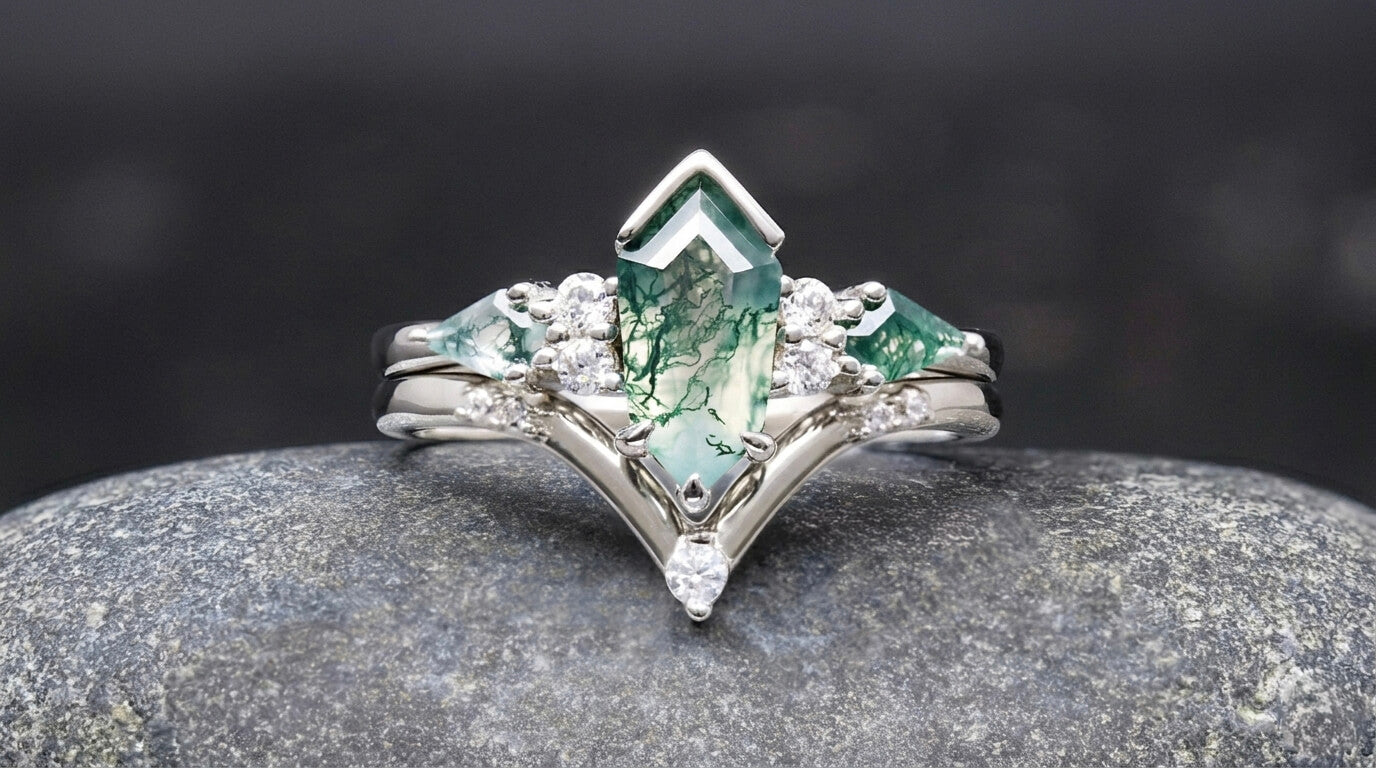
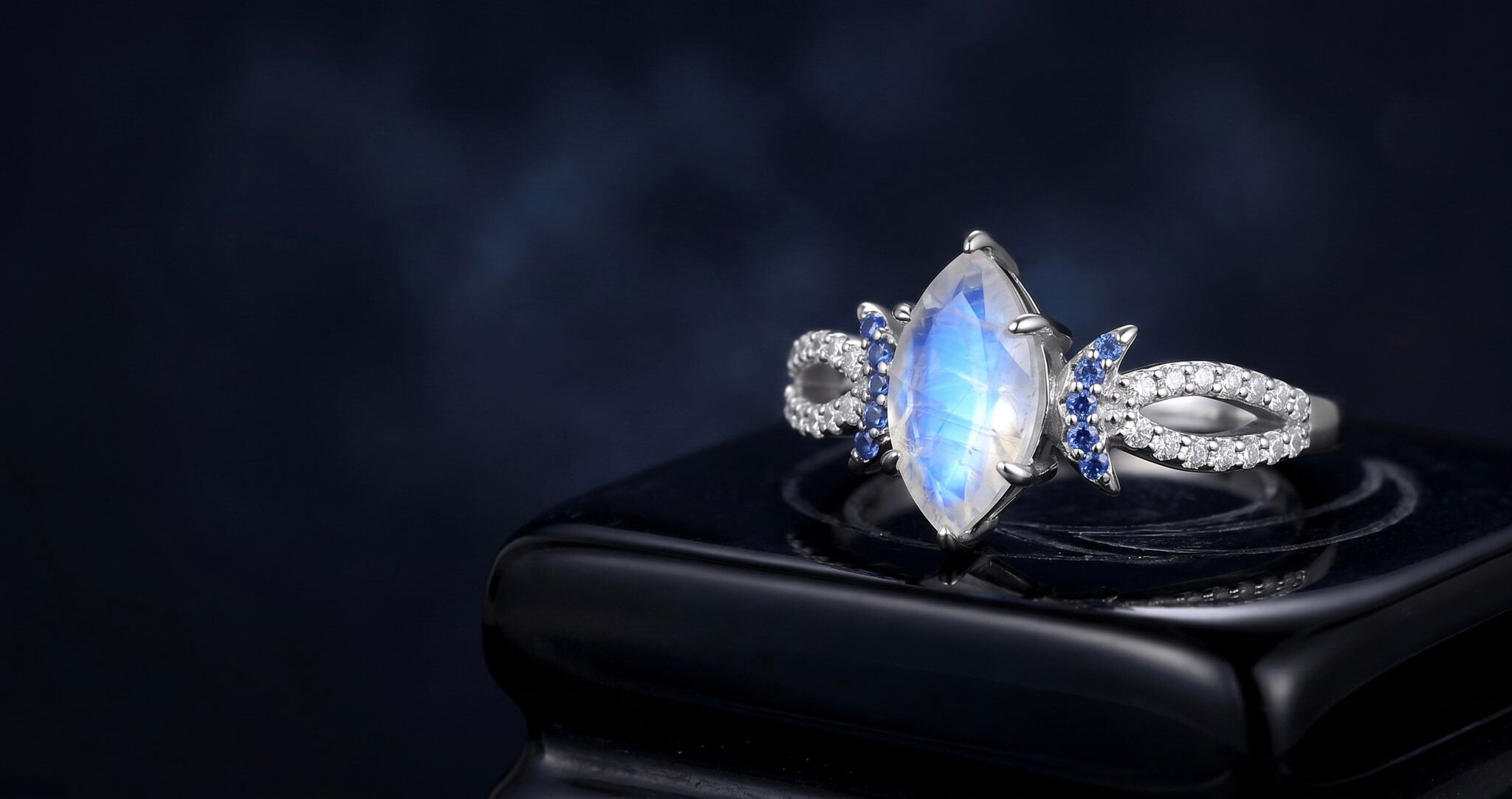
Alternative engagement rings move away from the classic diamond solitaire. They feature stones like moss agate, opal, sapphire, or amethyst. They come in sterling silver with finishes ranging from the natural unplated silver to gold, rose gold, and black plating. And they use settings and shapes that feel more personal than traditional designs.
If you want a ring that feels like you, this is the direction to explore. This guide covers what alternative engagement rings are, which stones and metals work best, what they cost, and how to pick one that fits your life.
What Is an Alternative Engagement Ring?
An alternative engagement ring is any engagement ring that steps away from the standard diamond solitaire on a plain white gold band.
That can mean a different stone. It can mean a different metal. It can mean a different setting, shape, or aesthetic. Some people want all of the above. Others only want to change one thing.
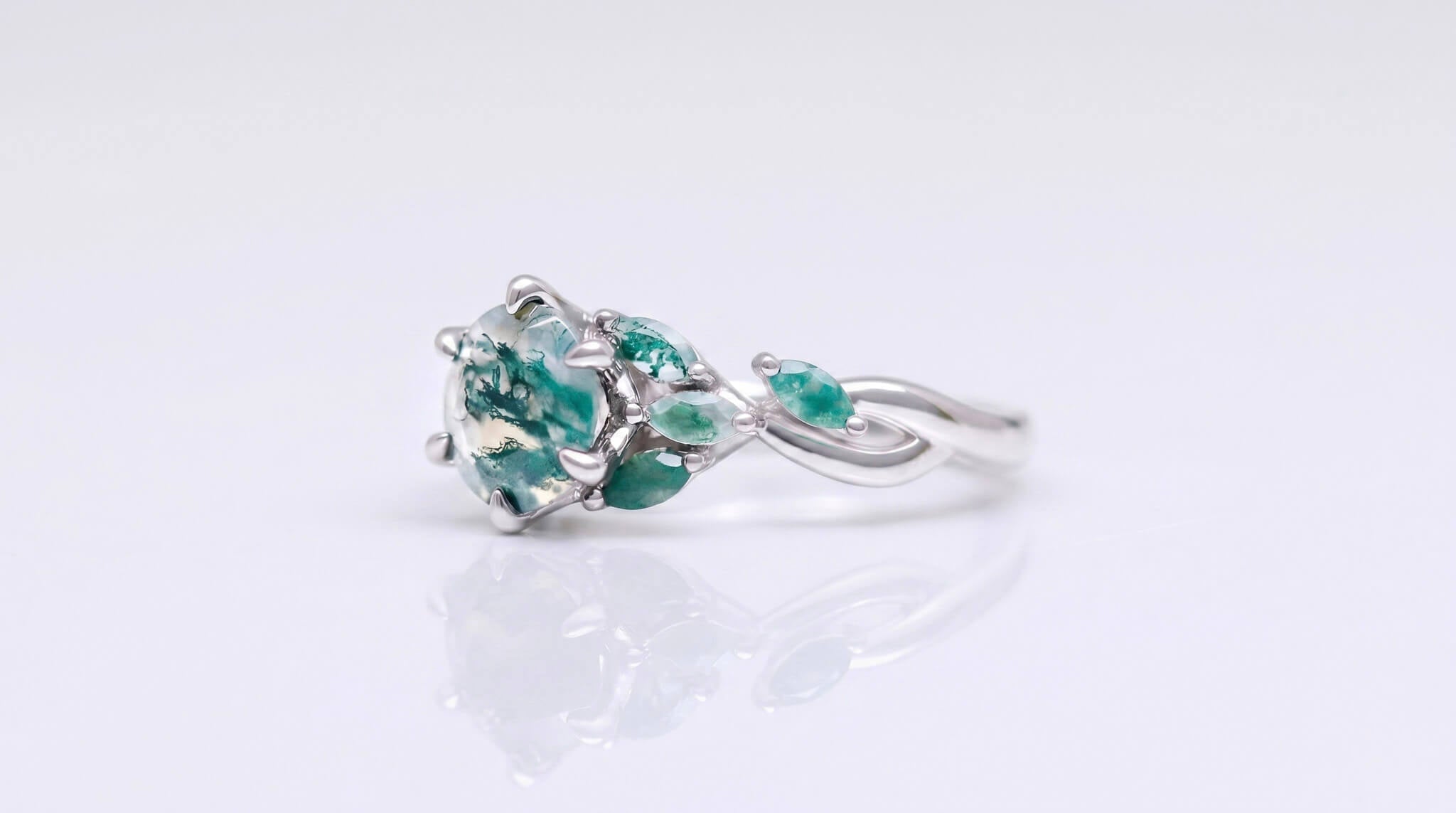
The point is not to rebel against tradition. The point is to pick something that reflects who you actually are. For some people, that is a moss agate ring with natural green patterns. For others, it is a deep blue sapphire, a glowing opal, or a black-plated band with an engraved pattern.
At Foreverings, we design rings for people who want something unconventional, personal, and made to be worn every day. Our pieces lean into nature-inspired, cosmic, and artistic themes rather than traditional styles. If you want to see examples, browse our collection of non-traditional engagement rings.
Why Are More People Choosing Engagement Ring Alternatives?
The shift has three drivers, and the third one is the biggest.
Individuality matters more than it used to. Fewer buyers want a ring that looks like their friend's ring or their mother's ring. This is especially true with moss agate, opal, and other inclusion-heavy stones where no two pieces are identical.
Social media accelerated it. It is hard to choose a traditional solitaire when your feed is full of sapphire clusters, cosmic-inspired designs, and cut-down vintage settings.
The bigger driver is the lab-grown diamond market. Lab-grown diamonds now cost roughly 60 to 85 percent less than mined diamonds of equivalent quality, and the FTC officially classifies them as real diamonds. Once that happened, the idea of "alternative" stopped meaning "compromise." A lab-grown diamond is chemically identical to a mined one, costs a fraction, and has no mining supply chain, so buyers started asking the obvious question: why pay more for something with a worse origin story?
That question pulled more people into the full alternative ring space, including colored gemstones and nature-inspired designs that have nothing to do with diamonds at all.
What Are the Best Alternative Stones for an Engagement Ring?
There is no single best stone. The right one depends on how hard-wearing you need it, how much maintenance you want to do, and what aesthetic you are drawn to.
Here are the most common options and who each one suits.

Moss Agate
Moss agate is one of the most distinctive alternative stones available. Each piece has natural inclusions that look like tiny plants or landscapes frozen inside the stone. No two rings are the same.
Moss agate sits around 6.5 to 7 on the Mohs hardness scale, which measures how well a stone resists scratches. That is softer than a diamond but still fine for daily wear with a protective setting.
Who it suits: anyone drawn to nature-inspired aesthetics who wants something truly one of a kind.
Opal
Opal has a soft inner glow that shifts color as the light moves. It is often described as romantic, otherworldly, and artistic.
Opal is softer than most alternative stones, around 5.5 to 6.5 on the Mohs scale. It needs more careful wear and occasional cleaning. If you are hard on your hands, opal is worth thinking twice about.
Who it suits: someone who loves unusual beauty and does not mind a bit of extra care.
Sapphire
Sapphire is the most durable alternative stone, sitting at 9 on the Mohs scale. Only diamond is harder. It comes in deep blue, teal, pink, yellow, and even black.
Sapphire is the closest thing to a diamond in terms of everyday toughness. If you want an alternative stone that can handle anything, this is the one.
Who it suits: anyone with an active lifestyle who still wants color and personality.
Amethyst, Garnet, and Citrine
These are colored gemstones in the quartz family. Amethyst is purple, garnet is deep red, and citrine is warm yellow. At Foreverings, we use natural stones for these since they are affordable enough to source responsibly without compromise.
All three sit around 7 on the Mohs scale. They are fine for daily wear but benefit from bezel or low-profile settings that protect the stone edges.
Who it suits: someone who wants a rich, saturated color without the price tag of sapphire.
Lab-Grown Diamonds and Moissanite
If you love the look of a diamond but not the sourcing, lab-grown diamonds and moissanite are strong options. They are physically and chemically close to mined diamonds. They cost less. And because they come from a lab, there is no mining and no untraceable supply chain, which is a cleaner origin by definition.
At Foreverings, these stones are available through custom orders rather than our ready-to-ship collection. If you want a solid gold ring with a lab-grown diamond or moissanite centerpiece, that is a custom piece we can build for you.
Who it suits: someone who wants the classic diamond sparkle without the ethical and cost trade-offs of mined stones.
How Durable Are Alternative Engagement Rings?
Durability is the single biggest practical question. An engagement ring gets worn through hand washing, cooking, exercise, and everything else. A stone that scratches easily will show its age fast.
Hardness is measured on the Mohs scale, where 10 is the hardest (diamond) and 1 is the softest. A quick reference:
- Sapphire: 9
- Moissanite: 9.25
- Amethyst, garnet, citrine: 7
- Moss agate: 6.5 to 7
- Opal: 5.5 to 6.5

Anything under 7 benefits from a protective setting. A bezel, which wraps metal around the stone edge, is one of the best options. Low-profile settings that sit closer to the finger also help the stone stay out of harm's way.
One stone worth flagging: sandstone. It is softer and more prone to wear than moss agate or opal, and it does not hold up well as an everyday engagement ring stone. If you are looking for a nature-inspired aesthetic, moss agate is the sturdier choice.
At Foreverings, we design our alternative rings with daily wear in mind. For our ready-to-ship women's pieces, we use durable lab-grown simulant stones across most colors, which hold up to daily wear better than many softer natural options.
How Much Do Alternative Engagement Rings Cost?
Alternative engagement rings can range from under $200 to several thousand dollars. The biggest price drivers are the stone, the metal, and whether the ring is custom.
Rough price ranges:
- Amethyst, citrine, and garnet rings: typically the most budget-friendly
- Moss agate: varies widely based on pattern quality
- Sapphire: mid to high range, especially for deeper colors
- Lab-grown diamonds and moissanite: significantly less than mined diamonds for a similar look
The metal matters too. Sterling silver is more affordable than solid gold, and gold-plated or rose-gold-plated finishes give you the look of gold at a lower price point.
Setting a budget early makes this easier. Affordable alternative engagement rings exist at every price point. Foreverings carries rings starting at $139, which proves that a distinctive, personal ring does not need a traditional diamond price tag.
The main ongoing cost to plan for is replating. If you choose a plated finish like gold, rose gold, or black, the plating will wear over time with daily use and can be refreshed to bring the color back.
Are Alternative Rings More Ethical Than Traditional Diamonds?
Often, yes, especially if you choose lab-grown stones or ethically-sourced colored gemstones.
Lab-grown diamonds and moissanite skip mining entirely. The stone is created in a controlled facility, which means no untraceable supply chain and no environmental damage from mining operations. This is a cleaner origin than even "ethically sourced" mined diamonds, which still require mining.
At Foreverings, we use ethically sourced gemstones across our collection. That means the natural amethyst, garnet, citrine, and other colored stones in our rings come from responsible suppliers, not from unclear or questionable sources.
Recycled metals are another lever. We use sterling silver across our women's engagement ring collection, which does not require fresh mining on the scale that gold does.
What About Vintage or Antique-Inspired Designs?
Vintage engagement rings and antique engagement rings have a specific look: intricate metalwork, milgrain edges, filigree, and settings that feel ornate rather than minimal.
True antique rings are rare and often expensive. Vintage-inspired designs give you the same aesthetic using new materials. You get the look without the fragility of a 100-year-old setting.
Many Foreverings pieces blend vintage-inspired details with nature or cosmic themes. The result is a ring that feels timeless but not traditional.
How Do You Choose the Right Metal?
For our women's engagement ring collection, every piece is made in sterling silver. The choice comes down to the finish.

The natural metal finish with no coating. Clean, bright, and versatile. This is the most low-maintenance option because there is no plating to wear off.
Sterling silver with a gold finish layered on top. Gives you the warm look of gold at a fraction of the price of solid gold. The plating will wear over time with daily use and can be refreshed.
A softer, pinkish-gold finish layered over sterling silver. Distinctive and romantic. Same maintenance notes as gold plating apply.
A bold, modern finish layered over sterling silver. Works well for darker, gothic, or cosmic-inspired designs. Plating will wear over time and can be re-done.
If you want the lowest-maintenance option, unplated sterling silver is the pick. If you want the look of gold or something darker, the plated options give you that without the solid gold price tag, just plan for occasional replating down the road.
Can You Customize an Alternative Engagement Ring?
This is one of the biggest advantages of going alternative.
With a traditional diamond ring, you are mostly choosing a stone size and a setting. With an alternative ring, you can change:
- The stone type and cut
- The metal and finish
- The setting style (bezel, prong, flush)
- Engravings and patterns
- Mixed stones or accent details
At Foreverings, customization is part of how we work. Many of our designs can be adjusted to match your exact vision, whether that is a specific gemstone, a unique engraving, or a small design tweak. Custom orders also open up options beyond our ready-to-ship range, including solid gold rings with lab-grown diamond or moissanite centerpieces.
Custom work takes longer than buying off the shelf. Build in extra time if you have a proposal deadline.
What Should You Consider About Daily Wear?
Your ring will live on your hand every day. Think about what that actually looks like.
Ask yourself:
- Do you work with your hands?
- Do you exercise often or lift weights?
- Do you cook, garden, or do anything that puts your ring under stress?
- Are you okay with taking it off for certain activities, or do you want to wear it 24/7?
For Foreverings' ready-to-ship women's pieces, the durable lab-grown simulant stones we use across most colors handle daily wear well. The things to actually watch out for are softer natural stones like sandstone, which do not hold up the way you would want for an everyday ring, and plated finishes, which will wear gradually with daily use and need occasional replating.
A low-profile setting, where the stone sits close to the finger, also reduces the chance of catching on clothes or snagging.
Will an Alternative Ring Hold Its Value?
Most engagement rings lose value the moment they leave the store. Diamond rings, alternative rings, the lot. Resale was never really the point of an engagement ring, and at Foreverings' price point, starting around $139, it is even less so. You are buying a ring to wear, not to flip.
If you commission a custom solid gold ring with a lab-grown diamond or moissanite centerpiece, traditional value considerations apply more directly. Solid gold and larger stones retain more value over time than plated silver and lab-grown simulants, and insurance becomes worth thinking about for pieces in that price range.
Common Mistakes to Avoid With Alternative Rings
Most engagement ring advice assumes you are buying a diamond. Alternative rings have their own traps that traditional guides miss.
"Ethical" gets thrown around loosely in the jewelry industry. Ask the jeweler specifically where the stone comes from and whether it is natural or lab-grown. A good jeweler will give you a straight answer.
If you are going the custom route rather than buying a ready-to-ship ring, build in extra time. Custom alternative rings take longer than pulling something off the shelf, especially if the design is complex or the stone needs to be sourced. For a proposal deadline, start the conversation at least six to eight weeks out.
Rings with bezel settings or multiple accent stones are harder to resize later. Get sizing right the first time, ideally measured at a jewelry store, not with a guessed ring sizer.

Where Should You Buy an Alternative Engagement Ring?
Buy from a jeweler who specializes in this space. Mainstream stores often treat alternative rings as a side category. You get a better result from someone whose whole focus is non-traditional designs.
At Foreverings, we design non-traditional engagement rings for people who want something cosmic, nature-inspired, or artistic rather than traditional. Every piece is built for daily wear, with protective settings and ethically sourced stones, and most designs can be customized.
If you are thinking about something beyond the classic diamond, start by browsing a few styles, figure out what themes you are drawn to, and go from there. The right ring is the one that still feels right years from now.